The UI generation bottleneck
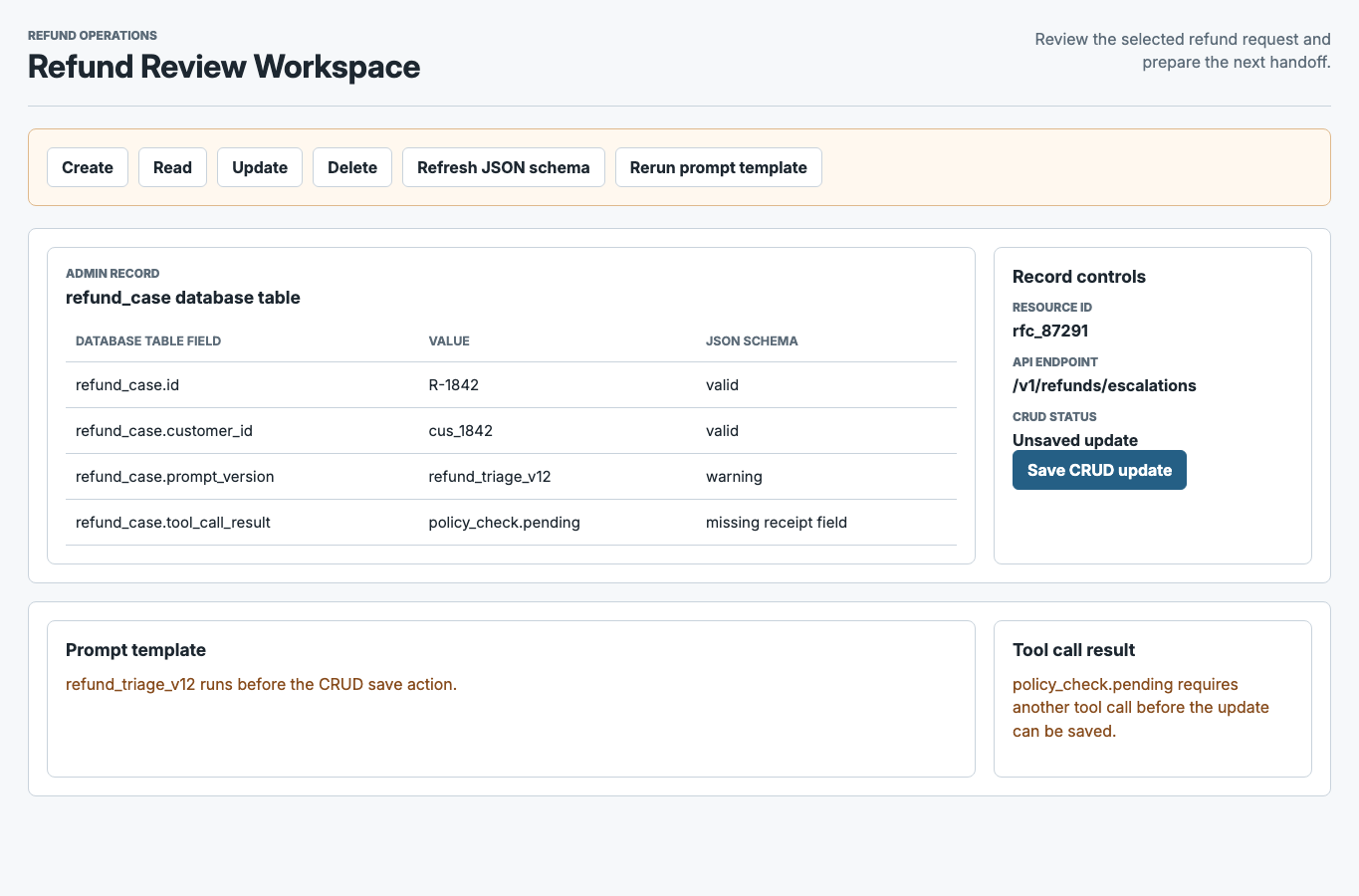
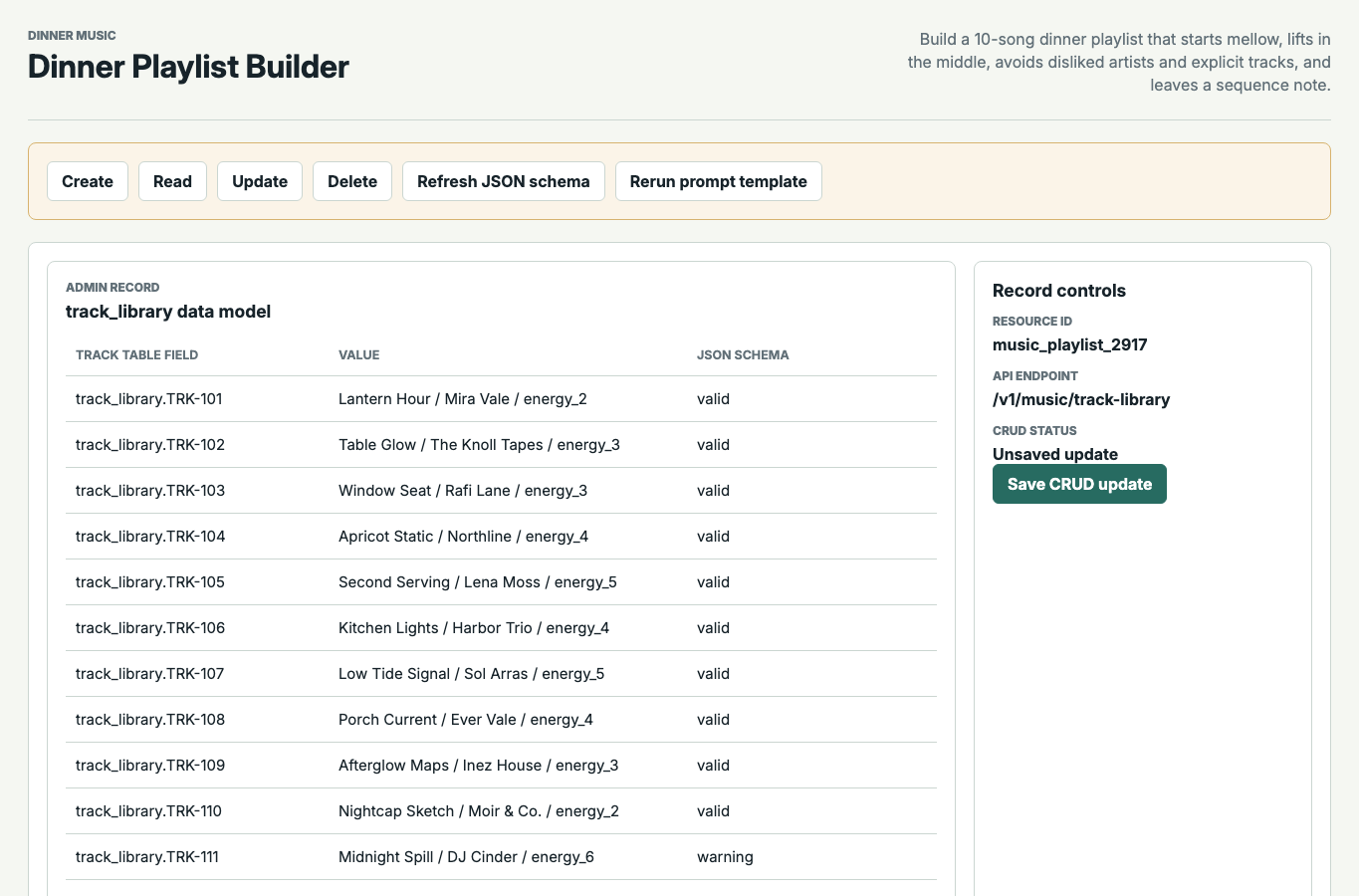
Generated interfaces often inherit the shape of the implementation material that fed them. Tables become screens, schemas become forms, internal labels become product language, and the user is left translating the interface back into the work they meant to do.
JudgmentKit treats that as a judgment problem before it is a styling problem. The relevant question is whether the screen helps a person understand evidence, make a decision, and leave a useful handoff.
What JudgmentKit changes
JudgmentKit adds an activity-first review layer before UI generation. It asks what work is being supported, who participates, what decision matters, what vocabulary belongs in the surface, and what diagnostic detail should stay out of the primary experience.
Activity fit
Generated UI is judged against the work, not just against the input structure.
Decision support
The surface must make the next judgment or handoff easier to complete.
Disclosure discipline
Implementation detail remains diagnostic unless the activity is setup, debugging, or audit.
- Source briefProduct context and implementation-heavy material enter together.
- Activity reviewParticipant, objective, decision, outcome, and vocabulary are named.
- HandoffOnly ready guidance advances to UI generation.
- Generated UIThe draft is judged against the work, then loops back with findings.
How the evaluation works
The committed UI paired-artifact eval compares raw baseline artifacts with JudgmentKit-guided artifacts for the same UI tasks. Scores use a 0-100 weighted total with 0-5 metric scores underneath. Current hosted MCP release: 0.8.0. Latest UI eval MCP release: 0.7.0. These figures do not claim MCP pilot pass/fail status.
Qualitative paired-artifact evidence only; not a statistically powered benchmark.
Desktop and mobile screenshots are captured as visual evidence for review. The screenshots support inspection, but the scoring source is the committed artifact text and deterministic rubric.
- Latest committed eval run
- 2026-08-08 / mcp-0.7.0 / run-001
- Current hosted MCP release
- 0.8.0
- Latest UI eval MCP release
- 0.7.0
- UI paired cases
- 2
- UI paired pass rate
- 100%
- UI guided wins
- 2
- UI baseline wins
- 0
- Ties
- 0
- Claim level
- repeated_pair_signal
Benchmarks
Refund triage handoff
Dinner playlist builder
| Case | Raw score | Guided score | Delta | Winner | Activity fit | Leakage | Evidence |
|---|---|---|---|---|---|---|---|
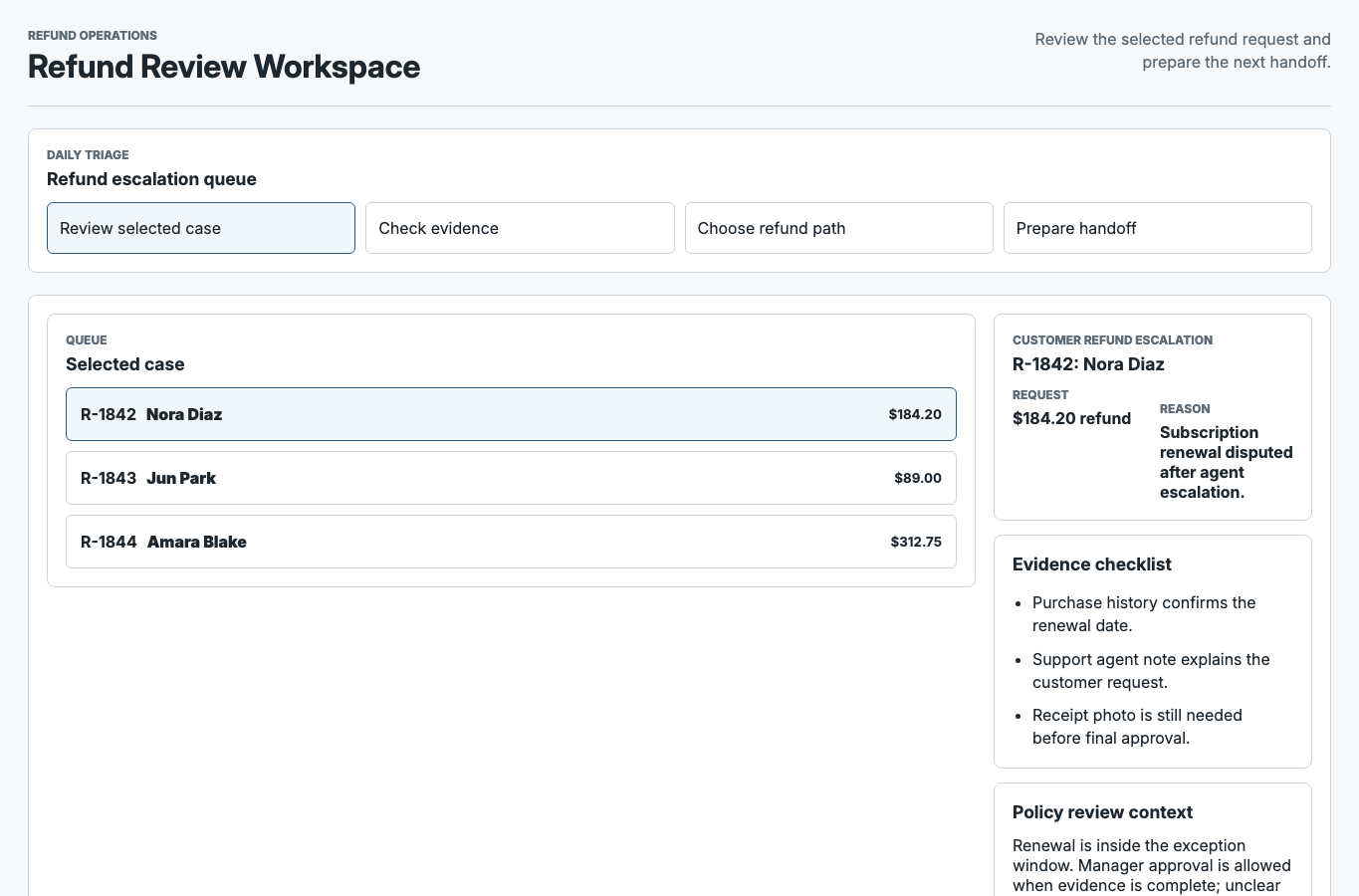
| Refund triage handoff | 4 | 100 | +96 | JudgmentKit guided | 0 -> 5 | 8 -> 0 | Raw screenshot · Guided screenshot |
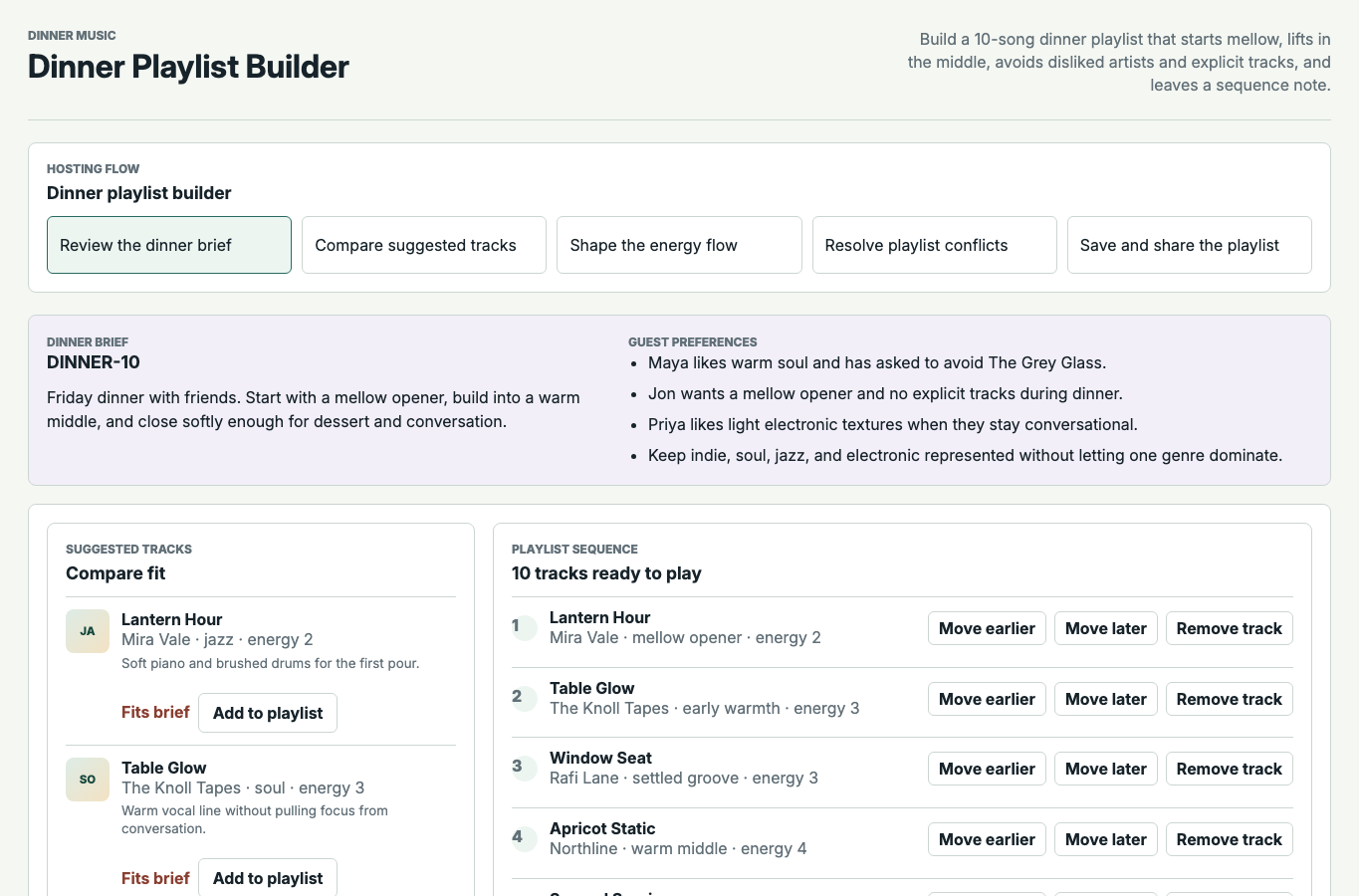
| Dinner playlist builder | 11.18 | 100 | +88.82 | JudgmentKit guided | 1 -> 6 | 10 -> 0 | Raw screenshot · Guided screenshot |
Example evidence
The model UI matrices separate the source context from JudgmentKit guidance and Material UI rendering. The visible matrix below uses Support refund triage as a compact example; the full set covers every committed use case.
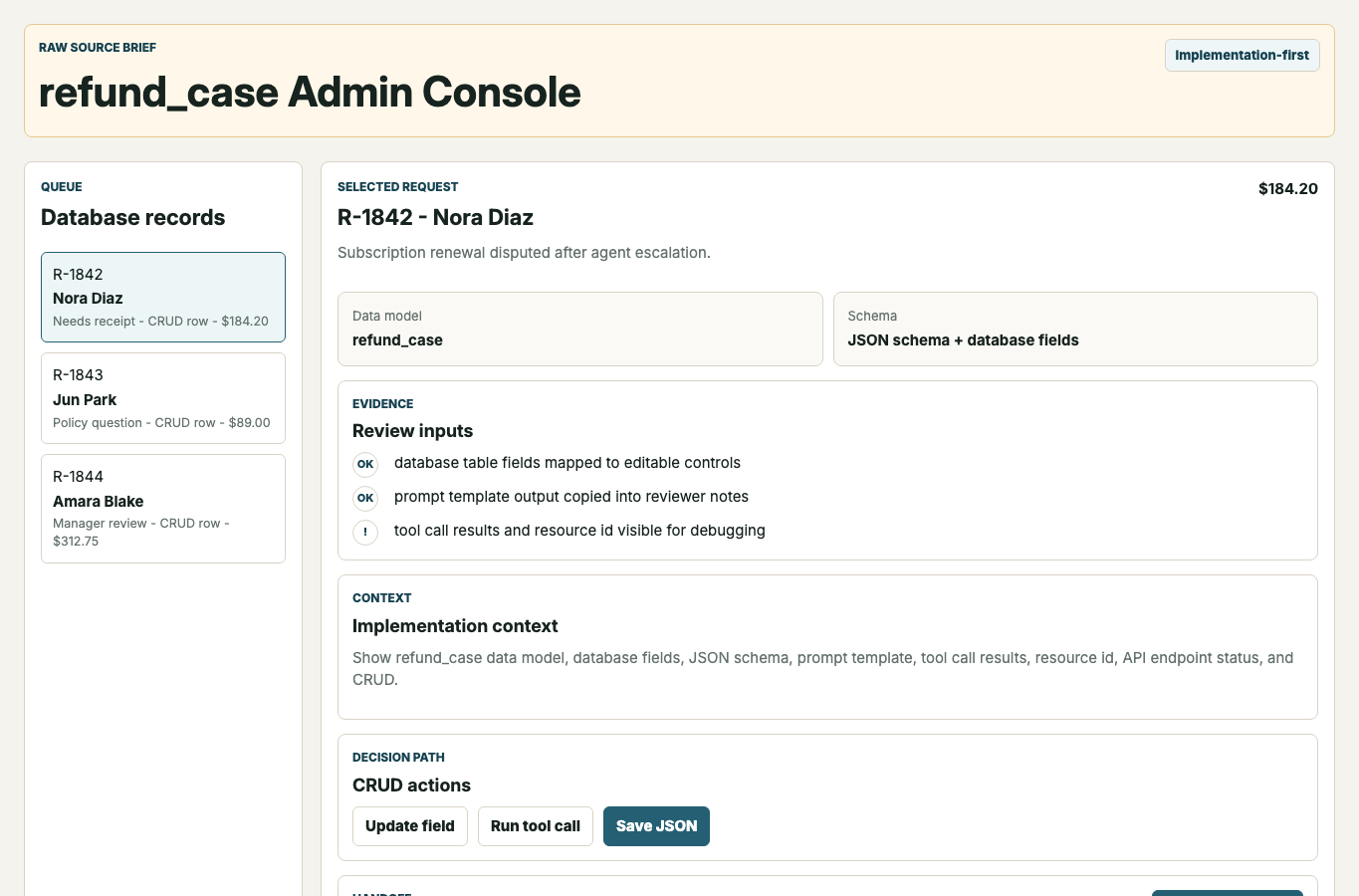 source brief + sample case
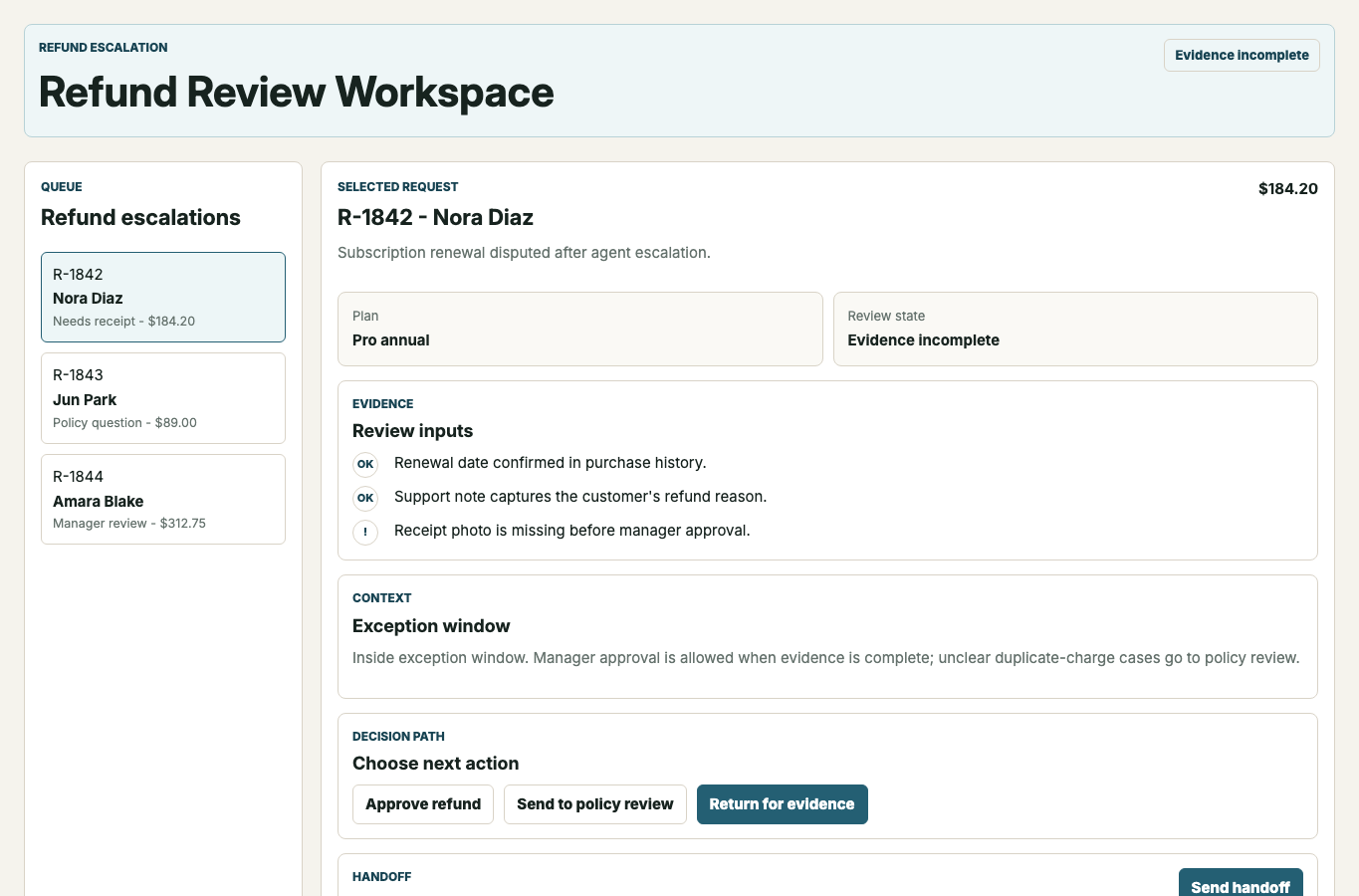 source brief + sample case + reviewed handoff + frontend skill context
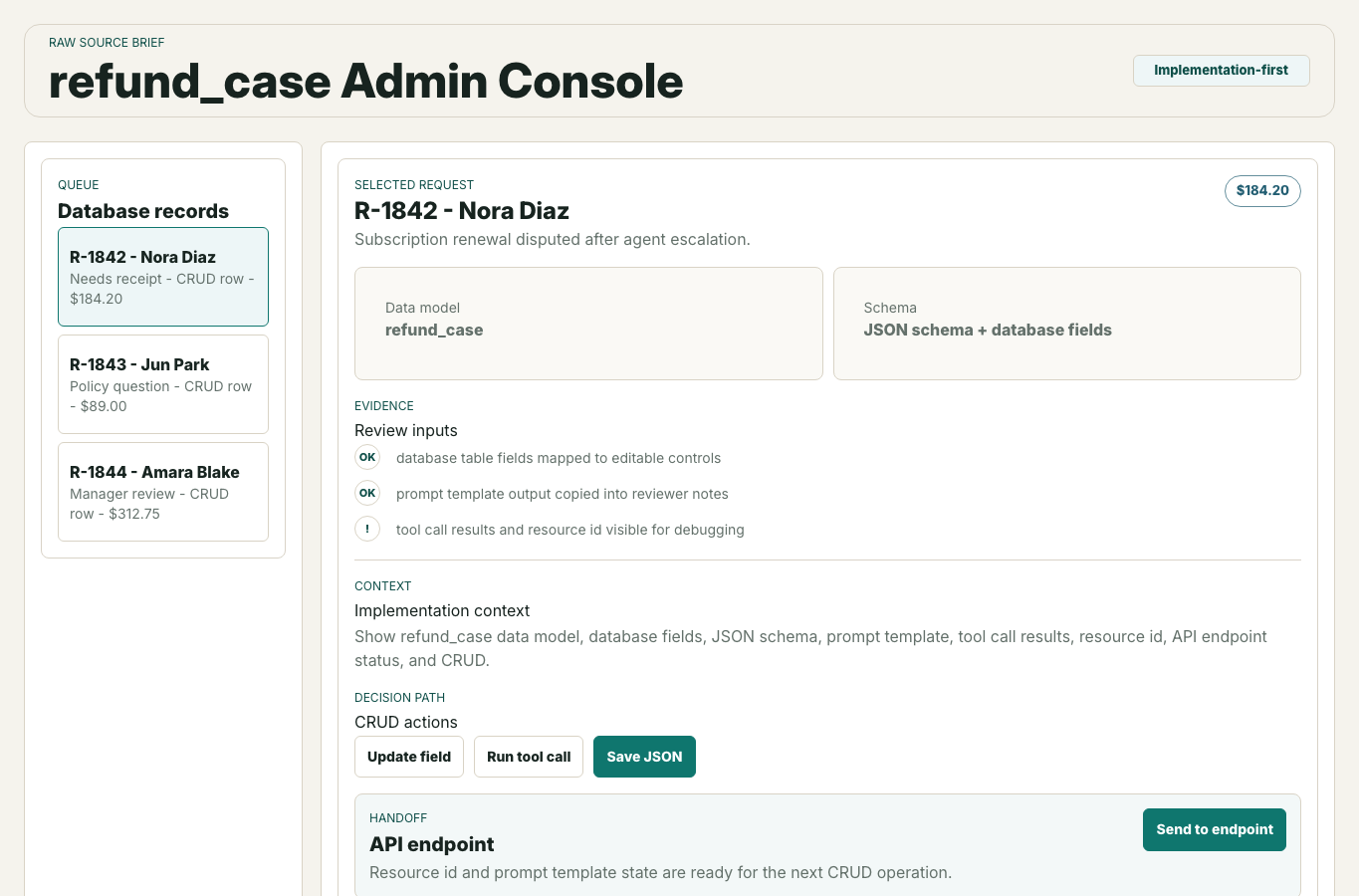 source brief + sample case + Material UI adapter
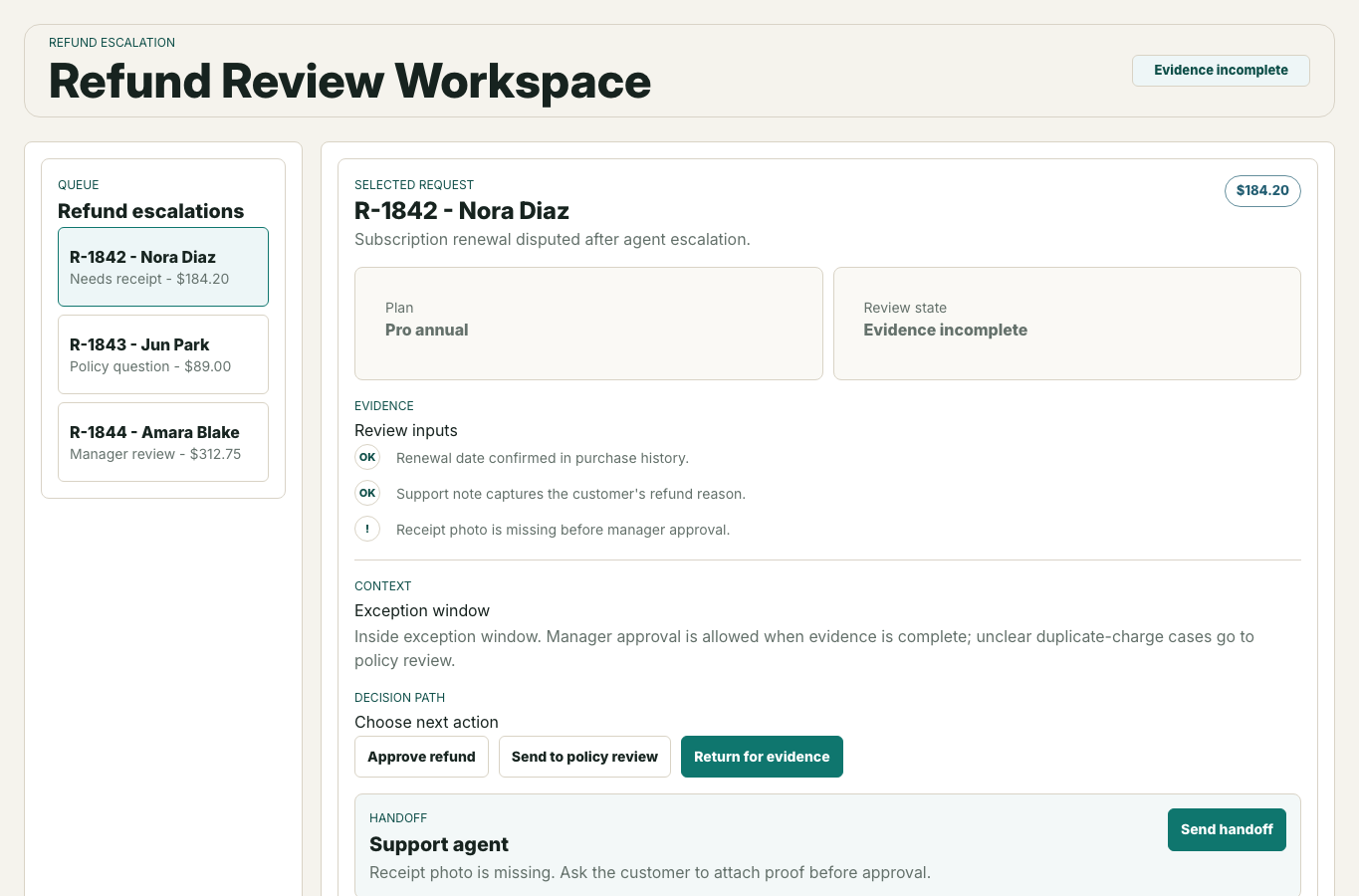 source brief + sample case + reviewed handoff + frontend skill context + Material UI adapter
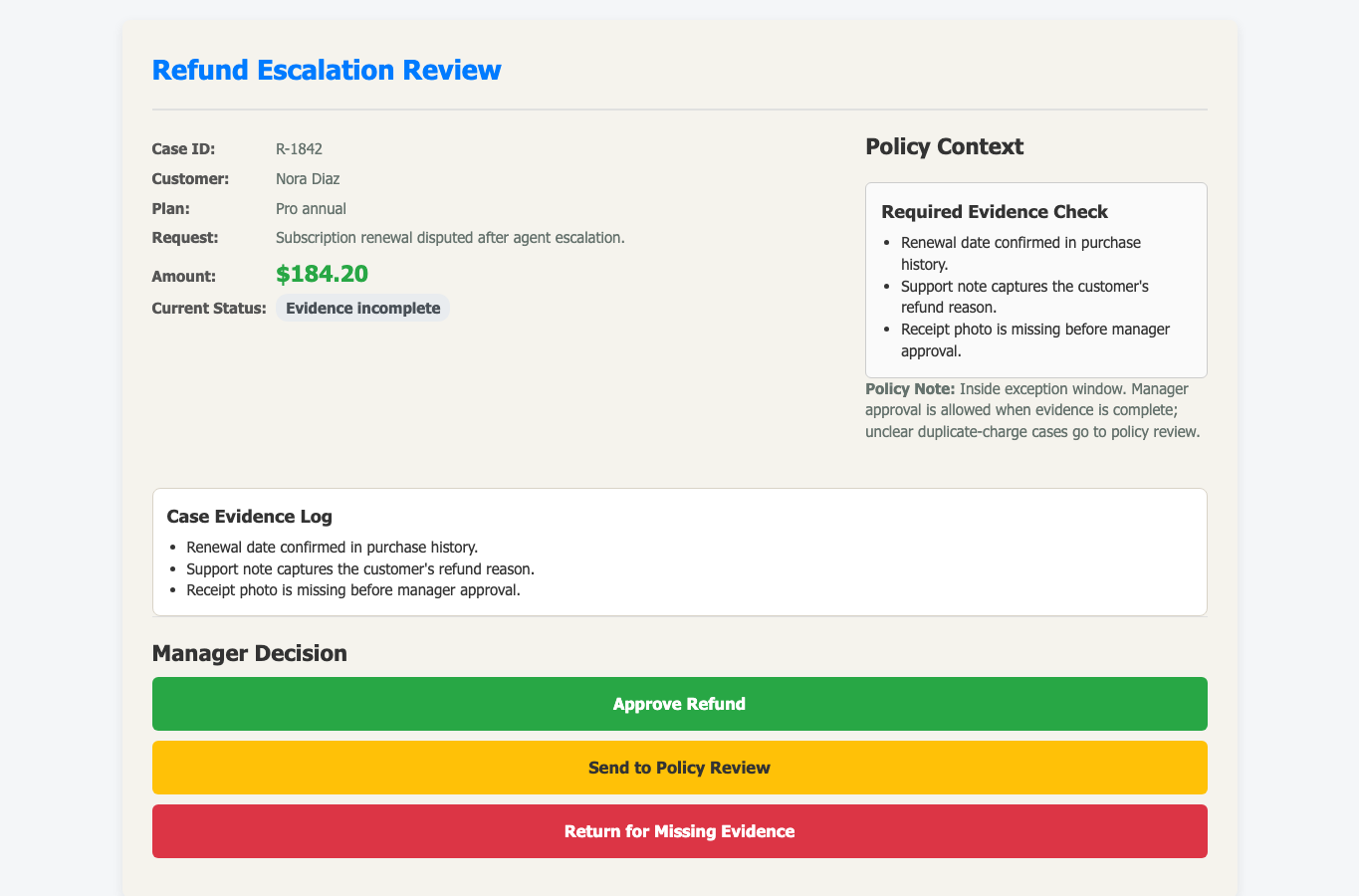 source brief + sample case
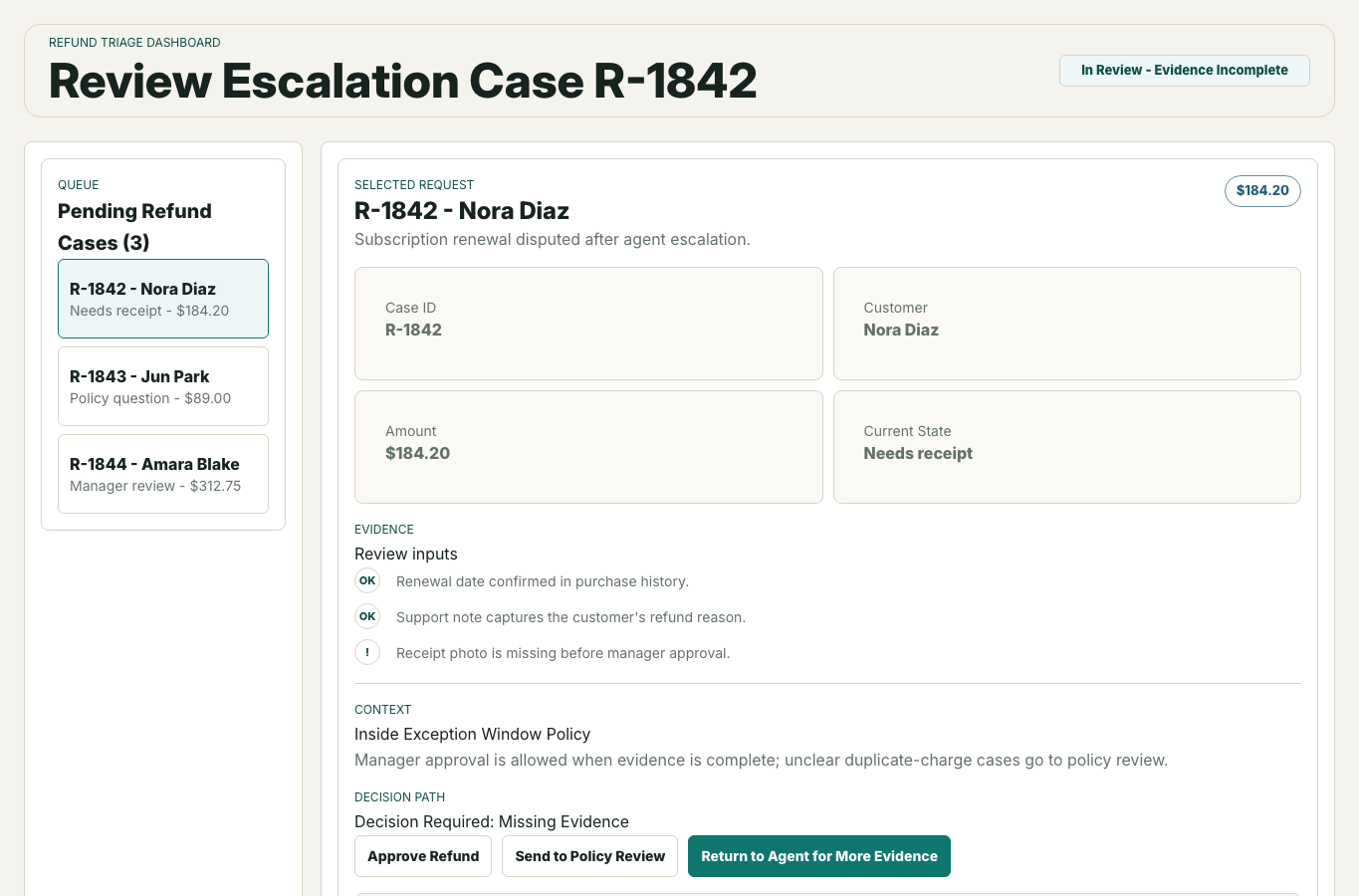 source brief + sample case + Material UI adapter
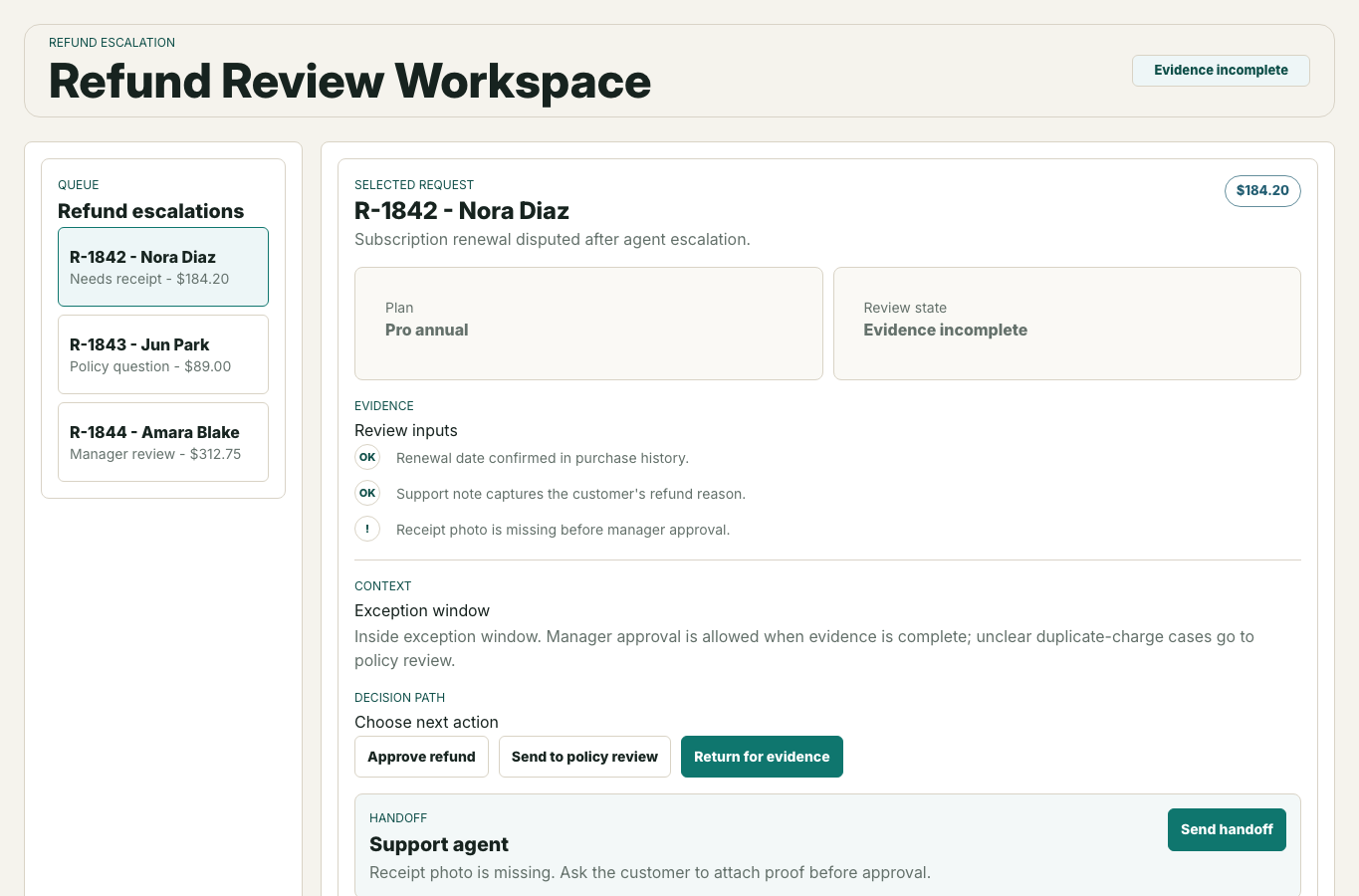 source brief + sample case + reviewed handoff + frontend skill context + Material UI adapter
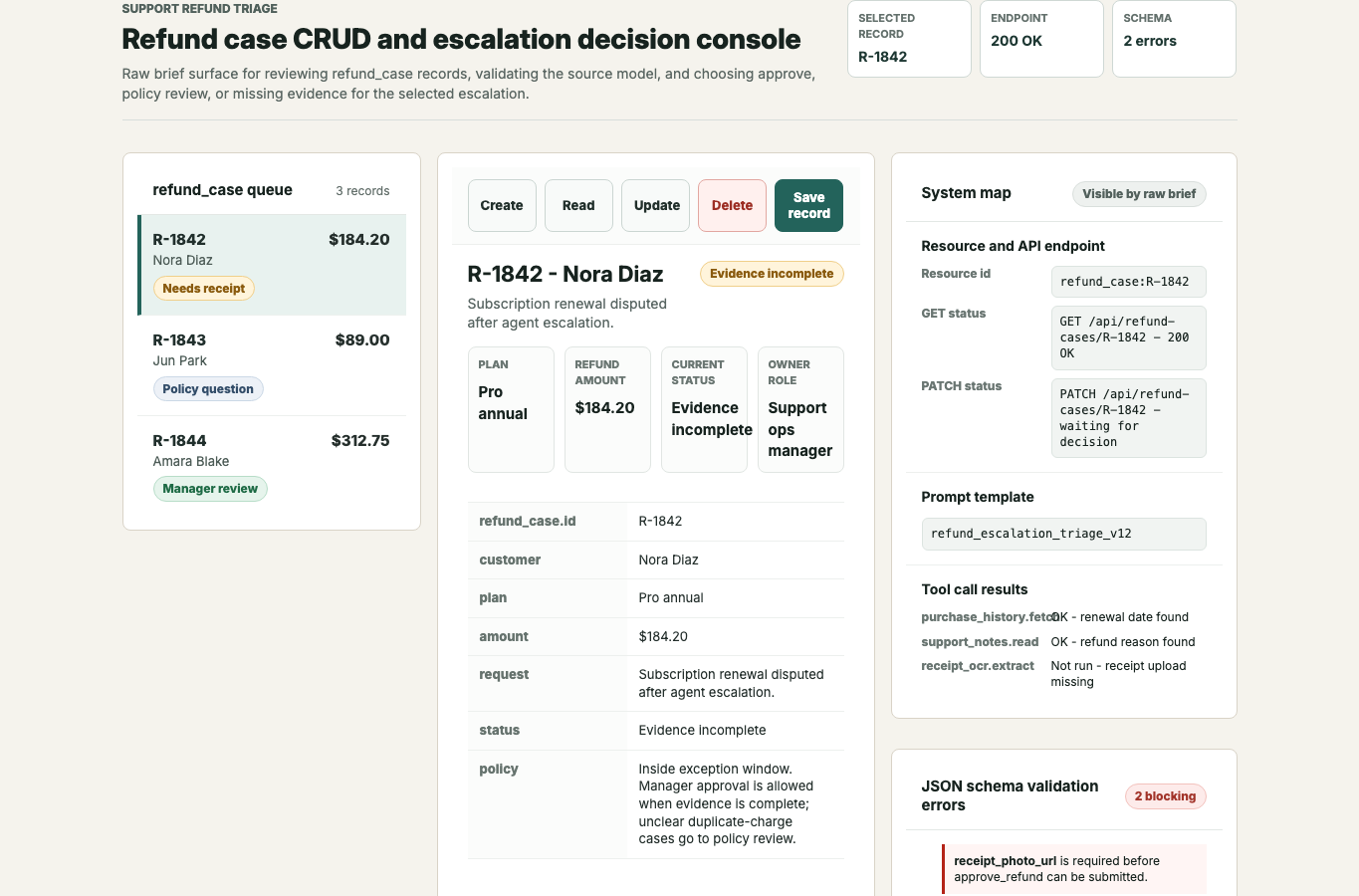 source brief + sample case
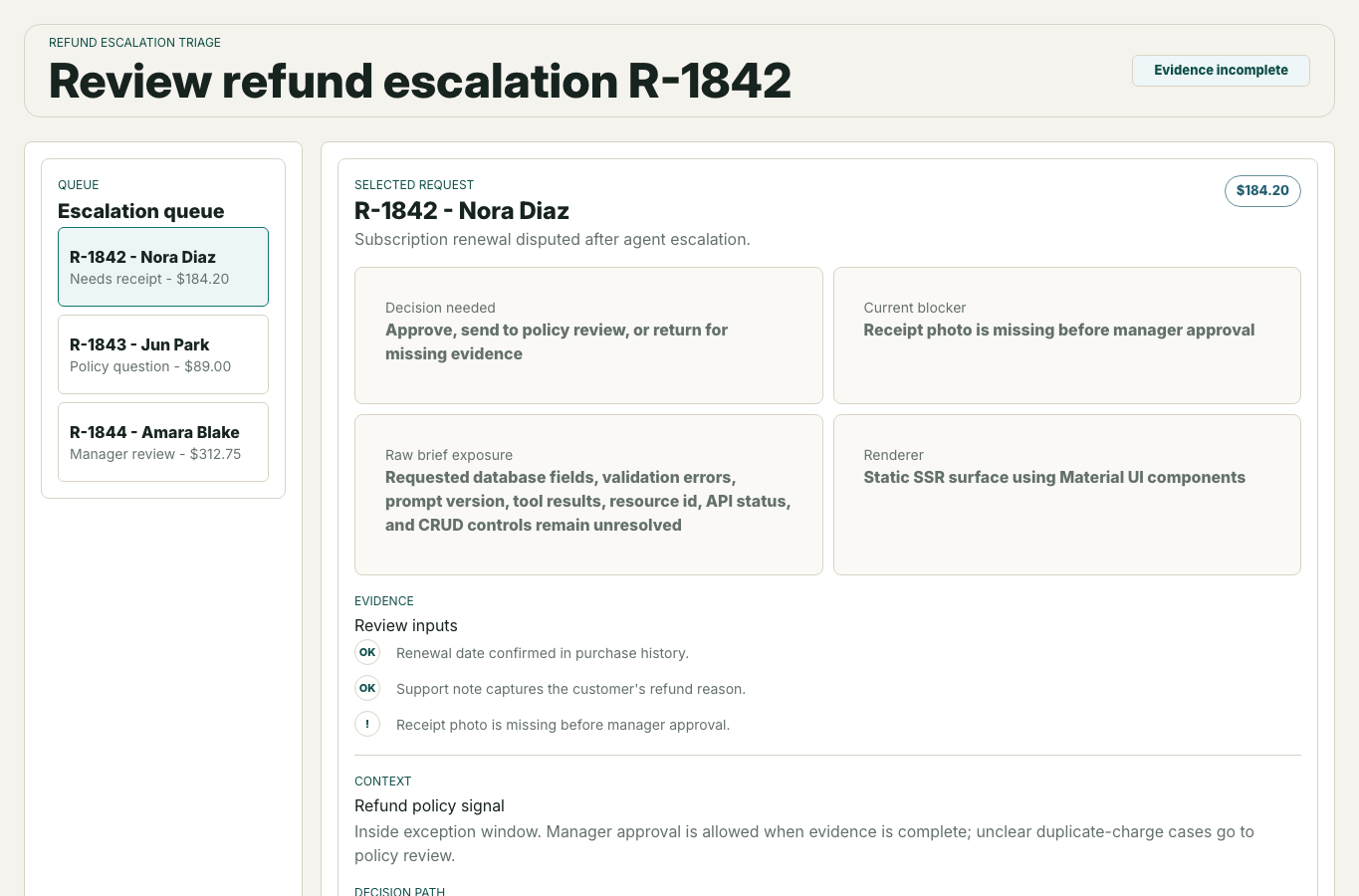 source brief + sample case + Material UI adapter
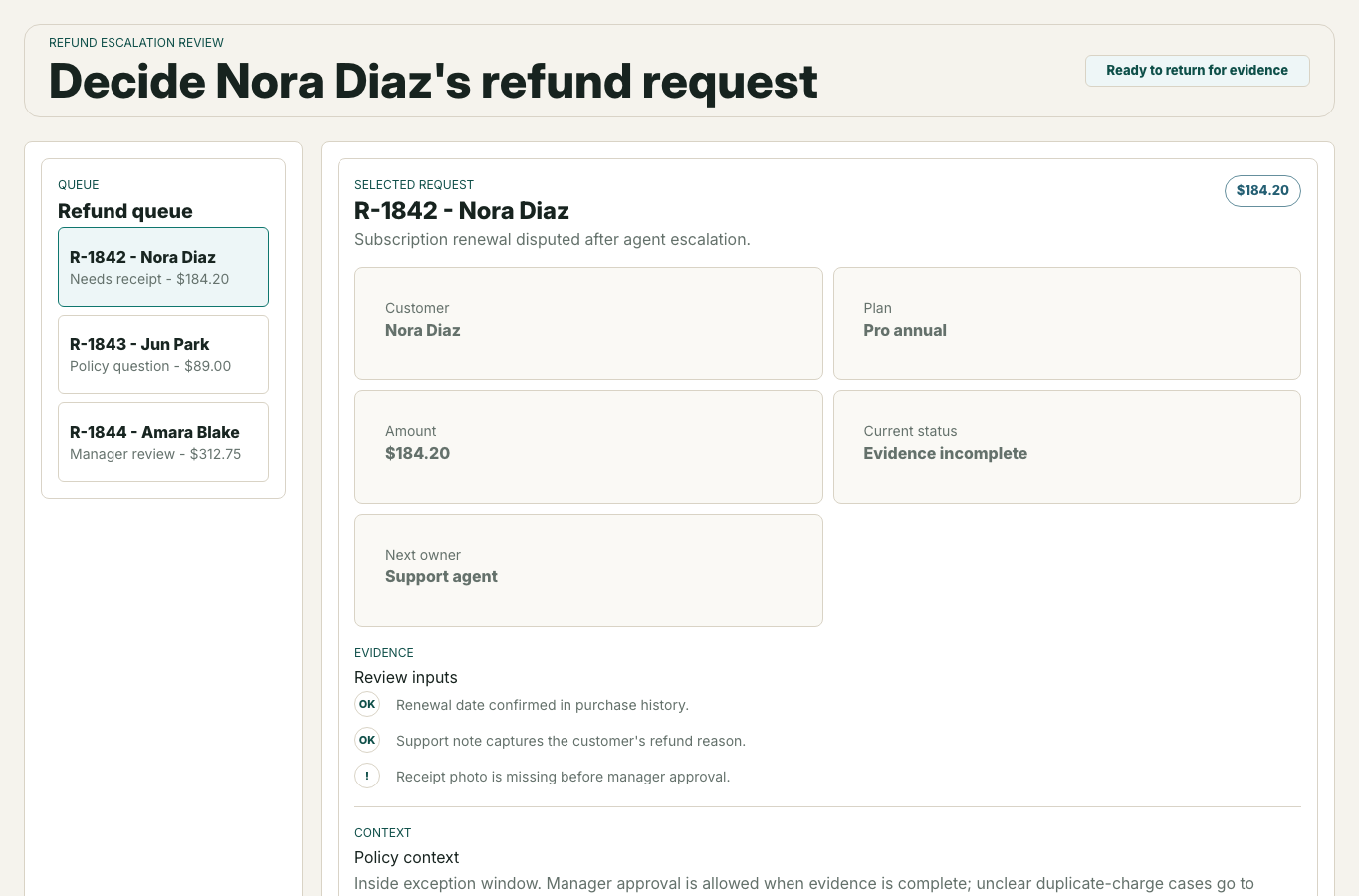 source brief + sample case + reviewed handoff + frontend skill context + Material UI adapter
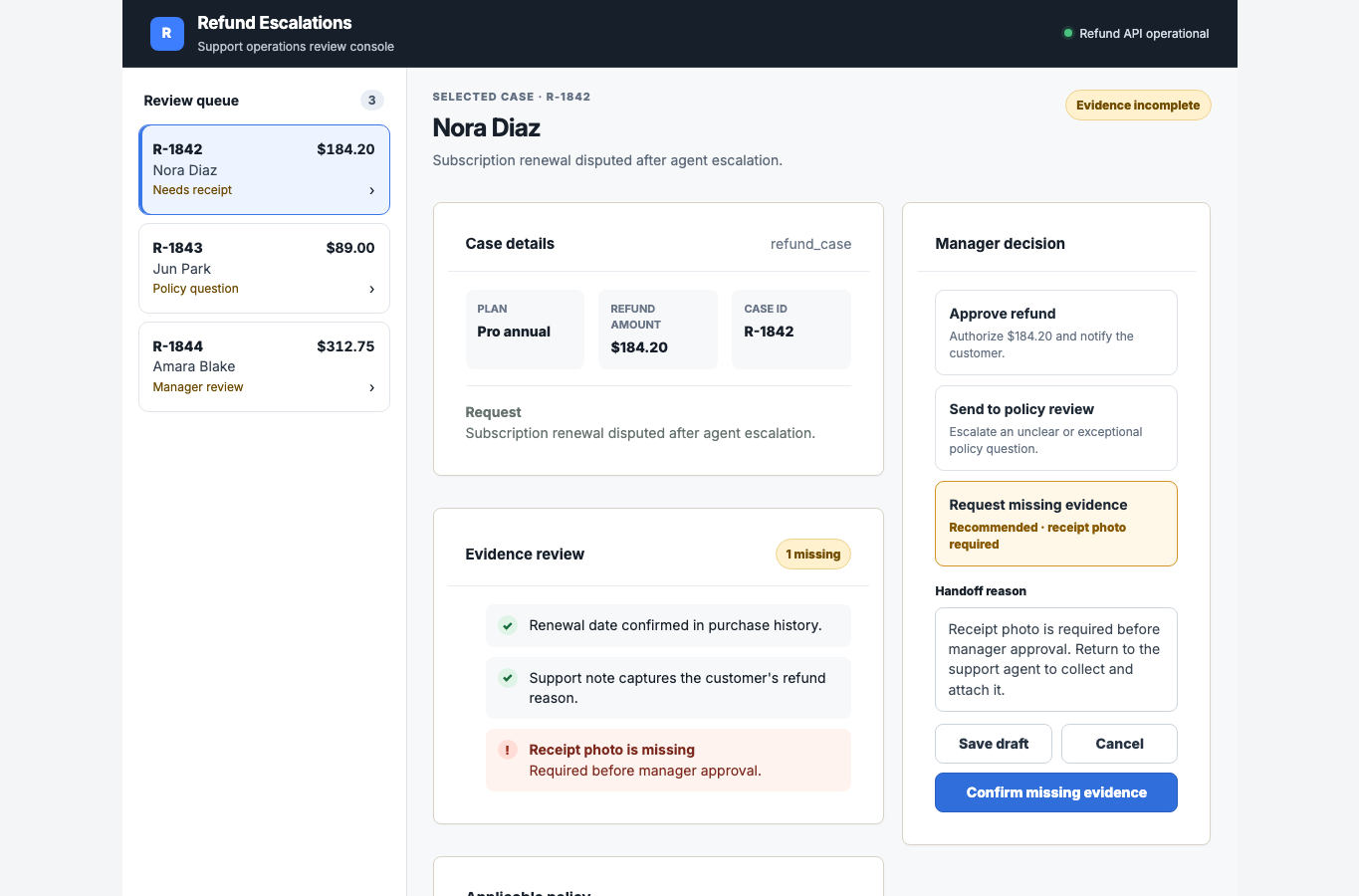 source brief + sample case
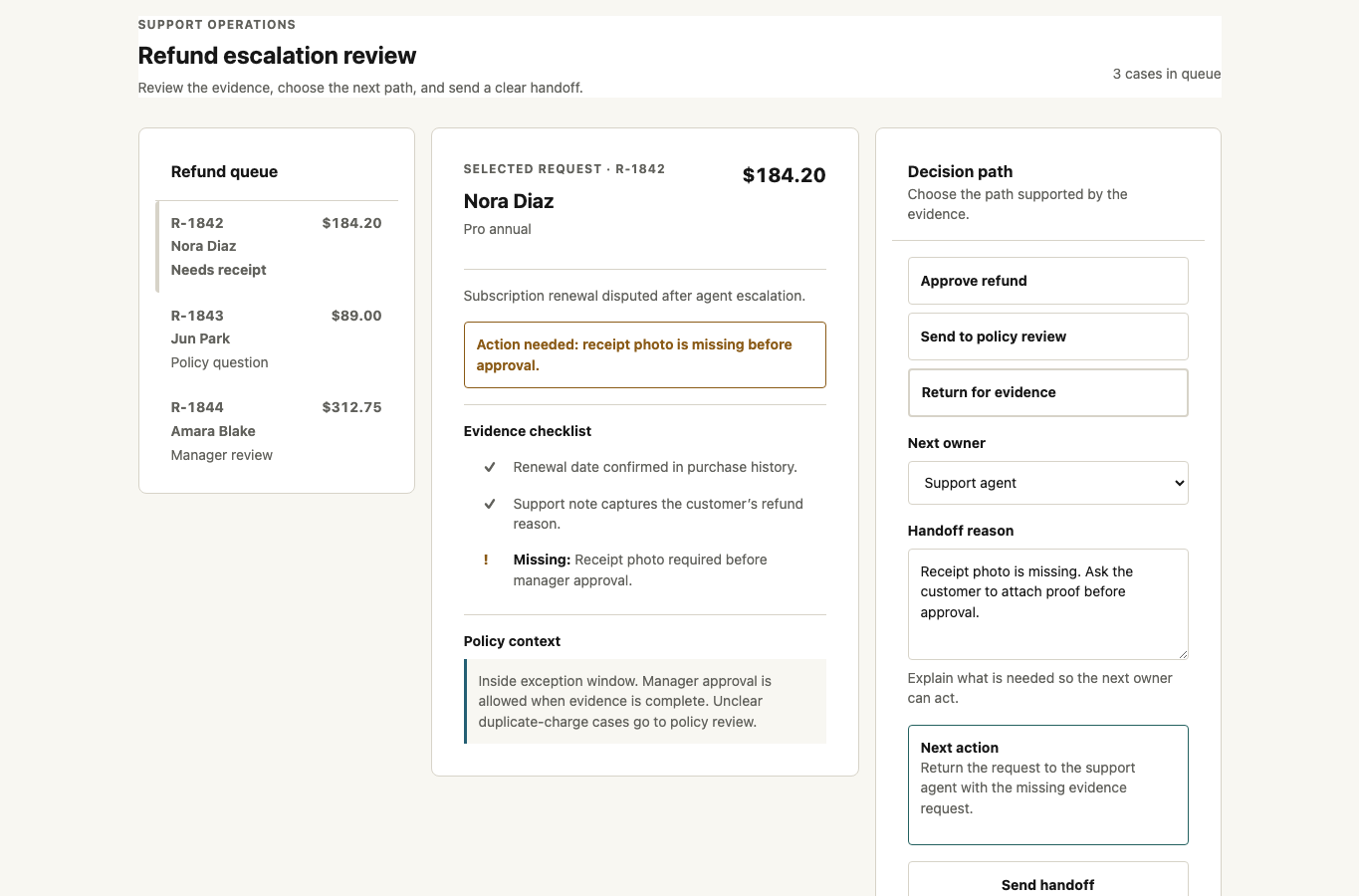 source brief + sample case + reviewed handoff + frontend skill context
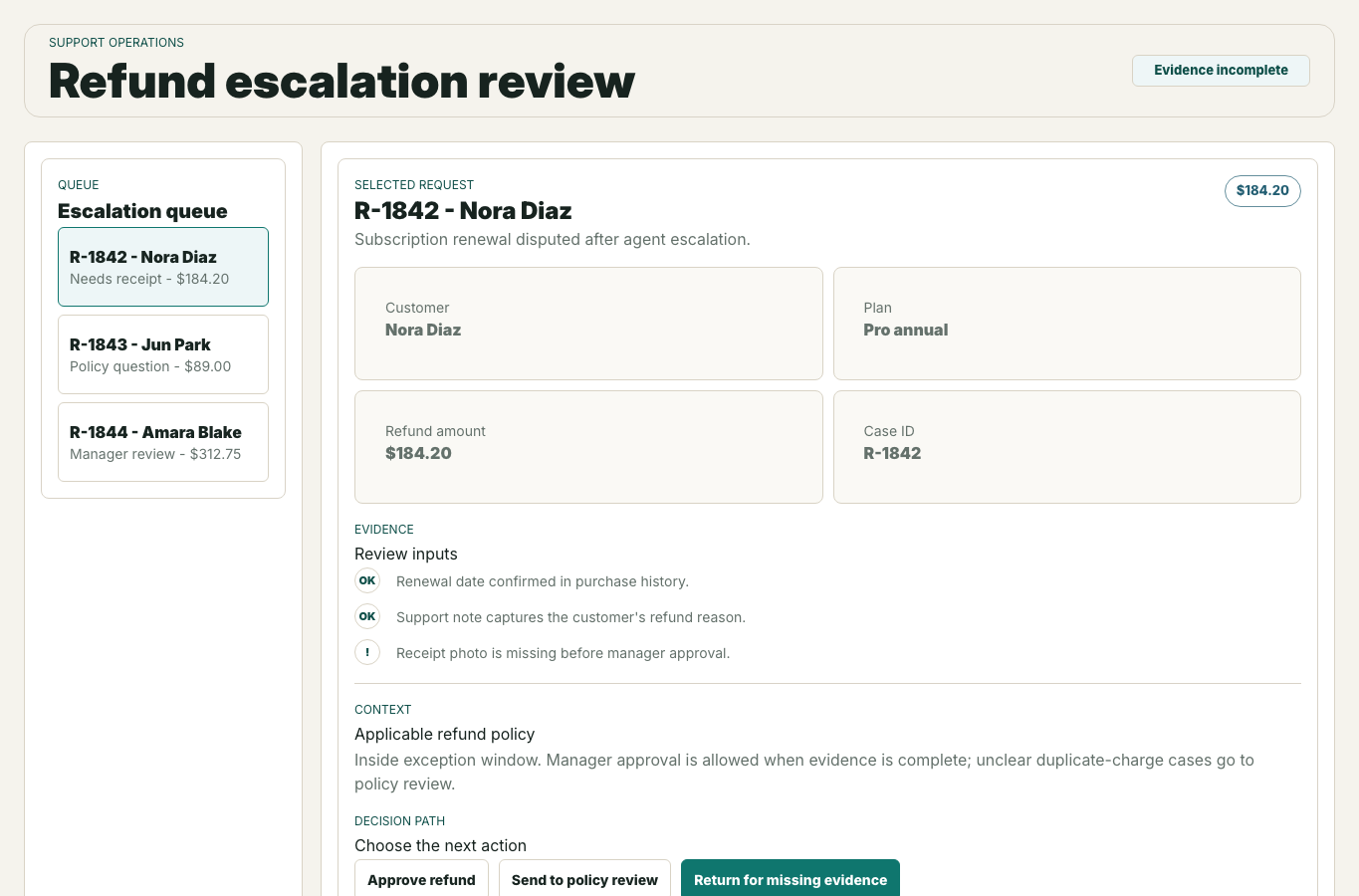 source brief + sample case + Material UI adapter
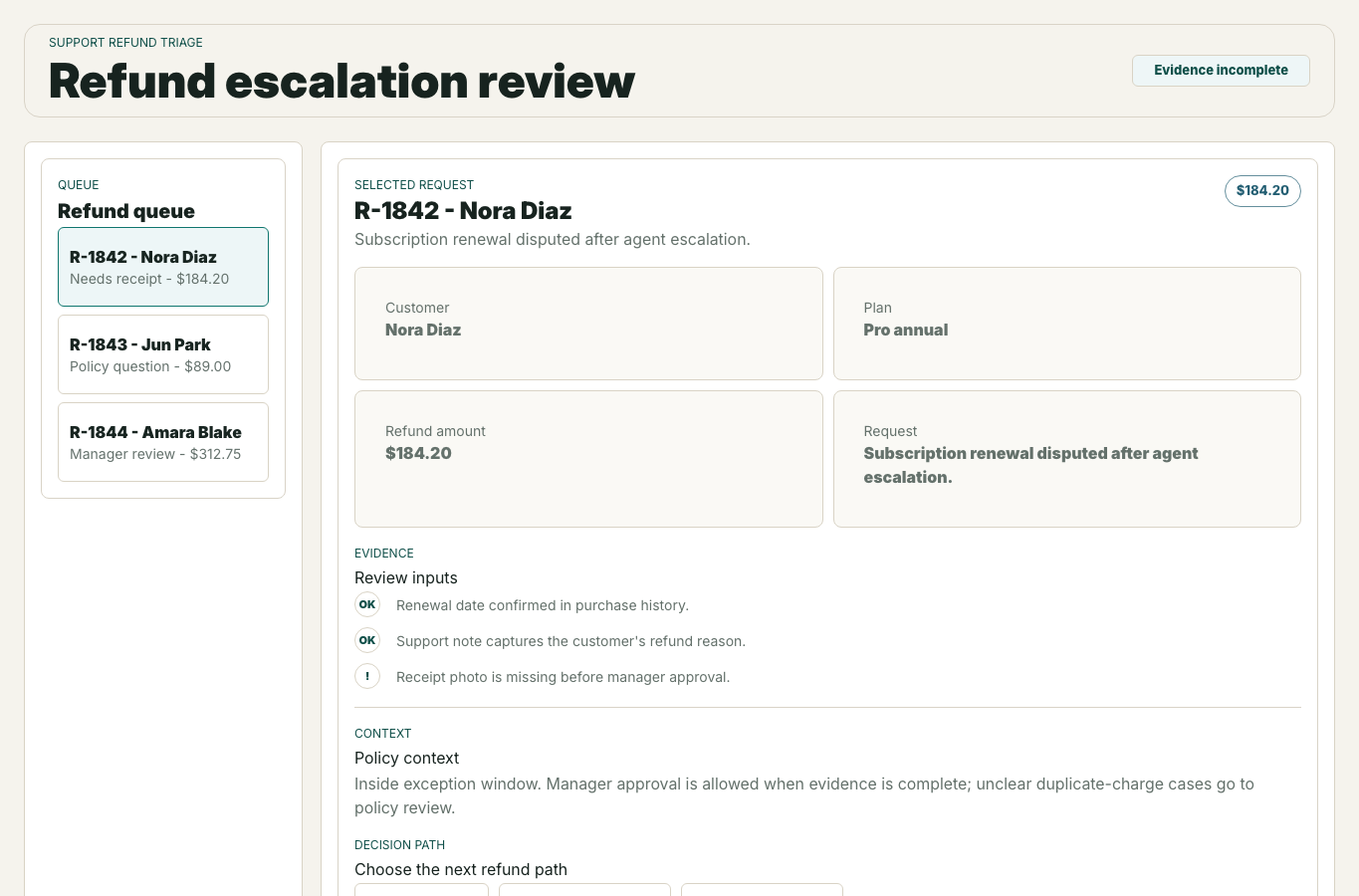 source brief + sample case + reviewed handoff + frontend skill context + Material UI adapter
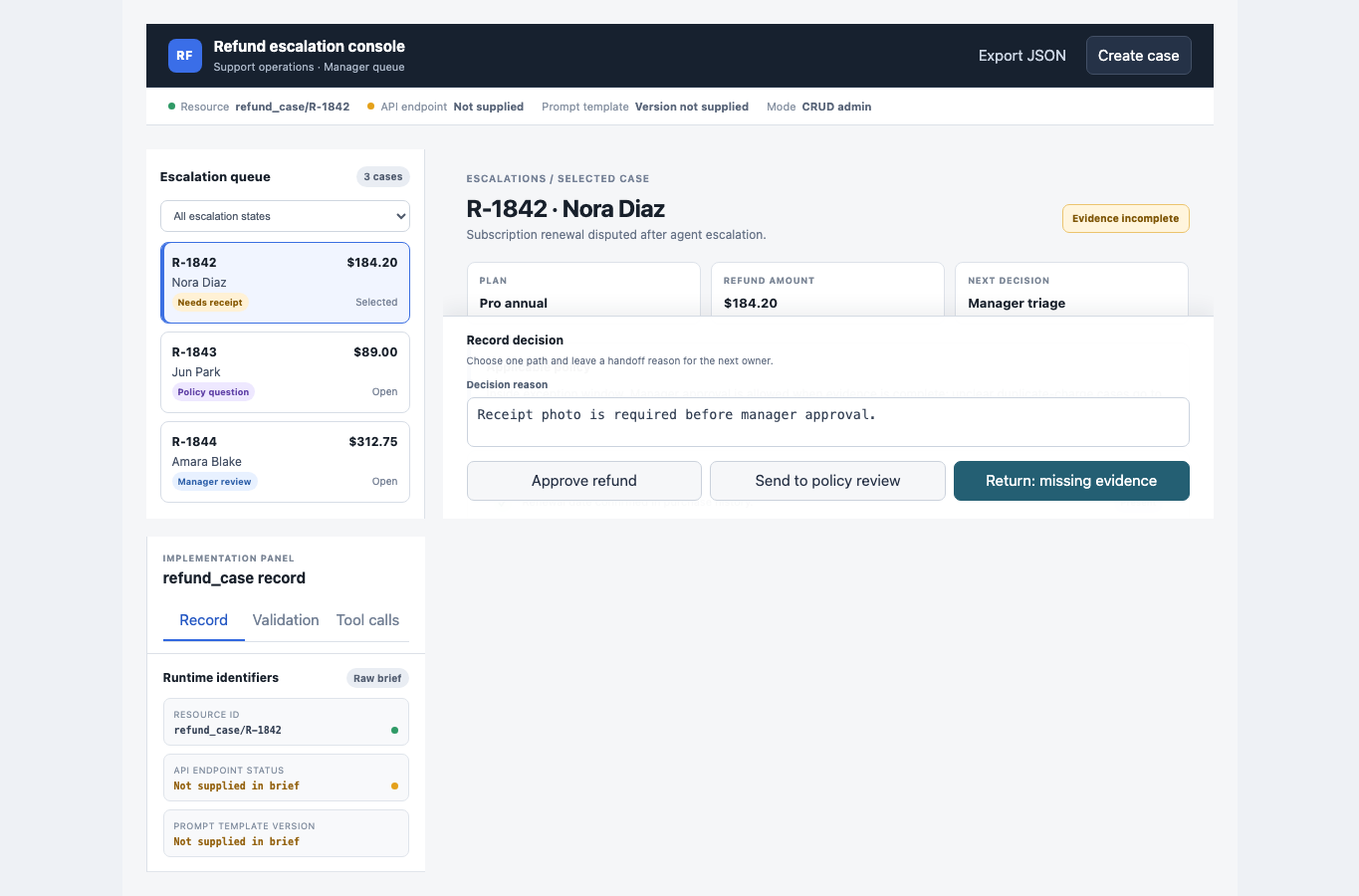 source brief + sample case
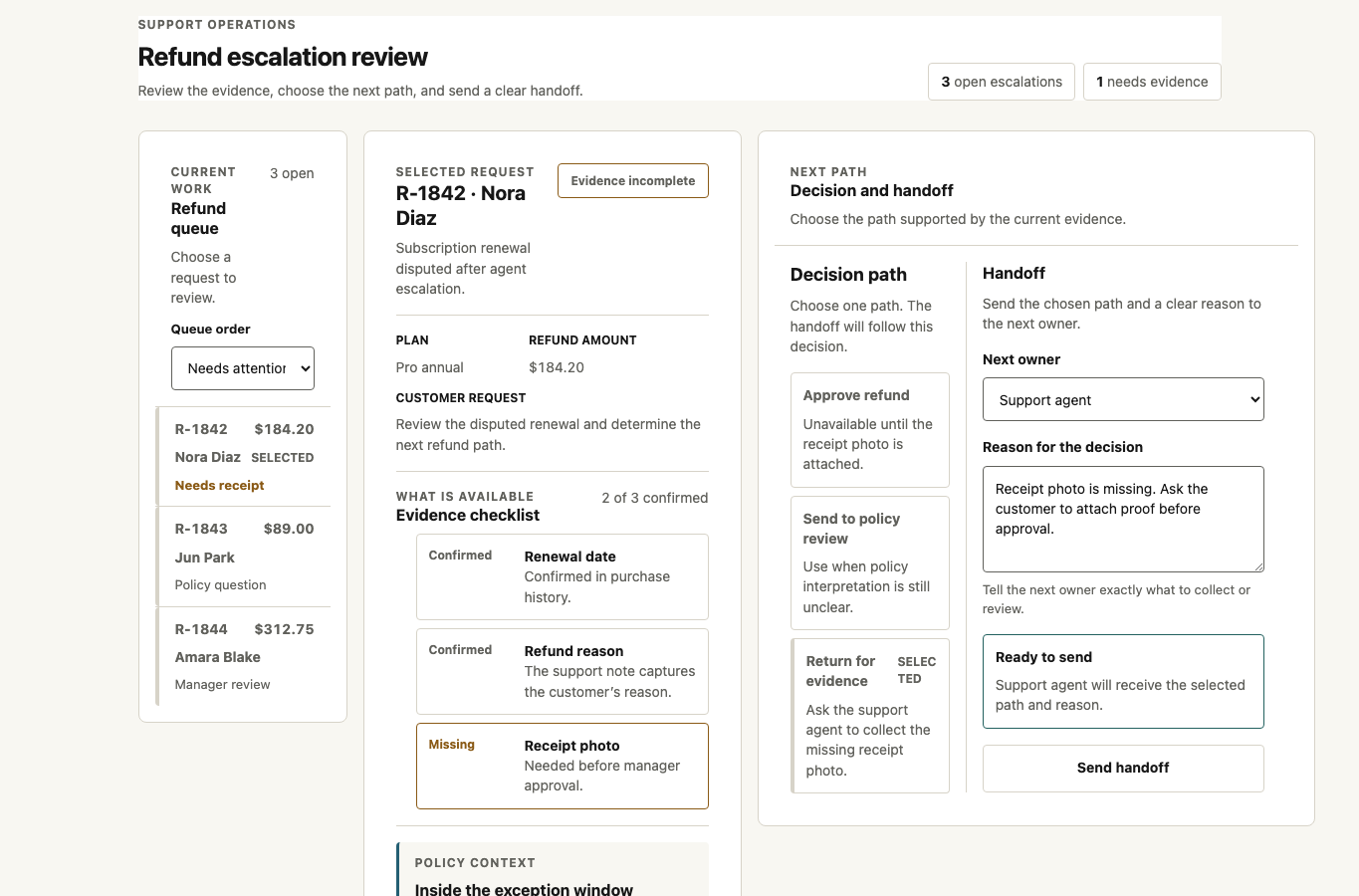 source brief + sample case + reviewed handoff + frontend skill context
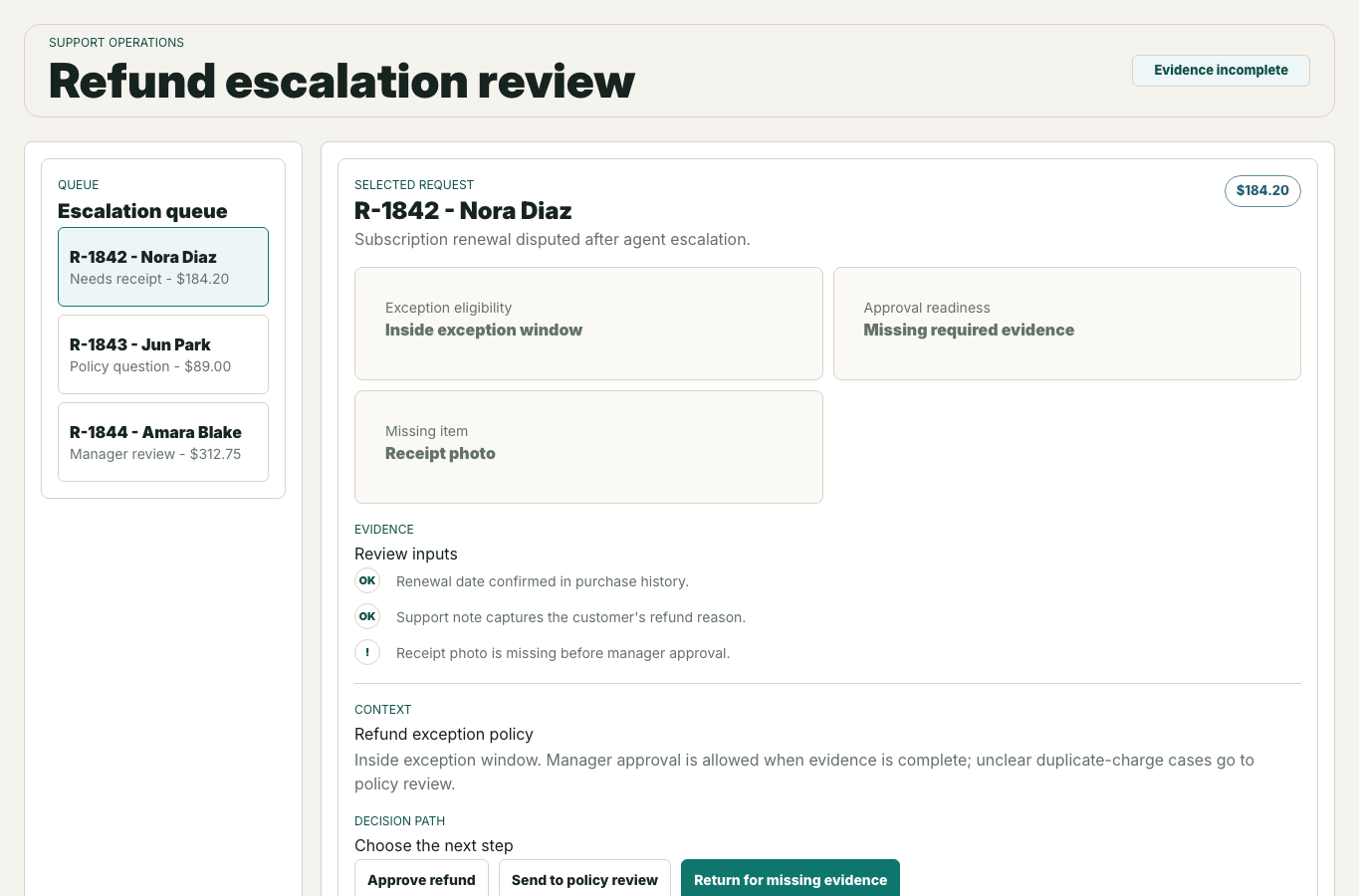 source brief + sample case + Material UI adapter
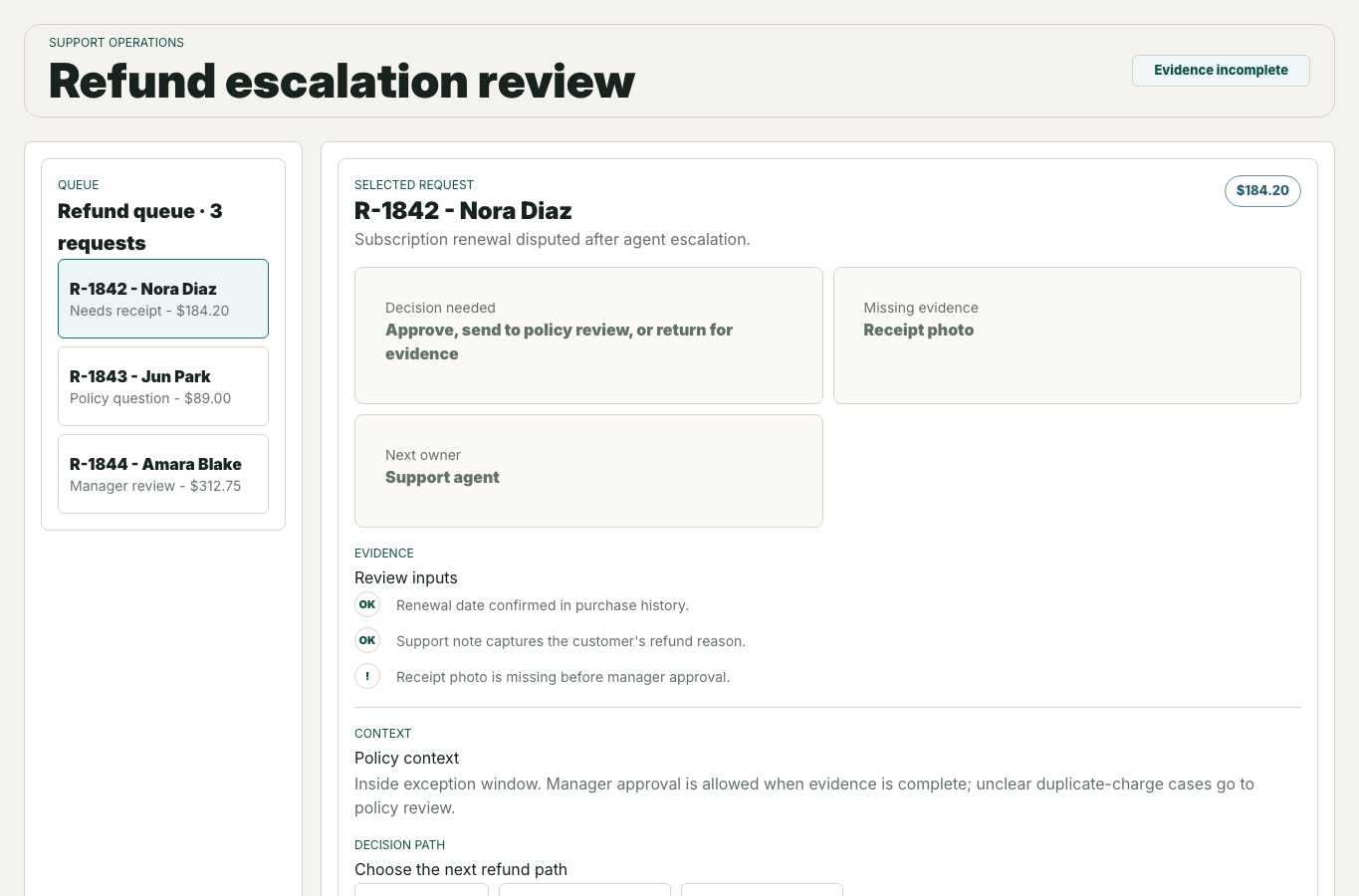 source brief + sample case + reviewed handoff + frontend skill context + Material UI adapter
Committed use cases
Support refund triage
A support operations manager reviews refund escalation cases and decides approve, policy review, or missing evidence.
Field service dispatch
A field operations manager assigns, reschedules, or escalates a repair visit using route, parts, and SLA constraints.
Clinical intake review
An intake coordinator reviews administrative appointment readiness and decides schedule, return missing forms, or escalate insurance verification.
B2B renewal risk review
A customer success manager reviews renewal risk and decides save plan, executive escalation, or wait for usage evidence.
Limitations and future work
This report is intentionally narrow. It uses committed paired artifacts and committed model matrix captures. It does not claim broad model behavior, does not call live providers during site build, does not claim MCP pilot pass/fail status, and does not treat visual polish as proof of activity fit.
Future versions can add broader MCP impact runs, more surface types, reviewer agreement, and richer interaction probes.
Run data
Implementation details are listed here for audit and reproduction rather than used as primary product language above.